Instant hot water dispensers solve a daily bottleneck: slow kettles, inconsistent temperatures, and high energy waste. The pain shows up in busy offices, cafés, and hospitality counters. The fix is a well-specified, reliable system that dispenses near-boiling water on demand. I will show how to choose, test, and source the right unit with confidence.
The best instant hot water dispensers deliver stable temperature (70–100°C), high flow (1.5–3.0 L/min), and low standby losses, with certified safety and food-contact materials. In B2B settings, prioritize tankless or hybrid flash-heating, scale management, precise controls for tea and coffee profiles, and verified certifications from labs like SGS/ITS to ensure compliance and reliability.
When you get the basics right, the rest becomes simple. Below I break down sizing, heating technologies, certifications, supplier evaluation, quality control, and total cost of ownership. I will also share how we build and test these systems so you can benchmark suppliers and avoid costly mistakes.
Busy counters need consistency. The problem is that many units over-promise on flow, temperature stability, or energy use. Downtime and taste issues follow. The best systems are engineered for repeatable, safe, and efficient dispensing. Focus on measurable specs and verifiable documents, not just marketing claims.
A top-tier instant hot water dispenser provides accurate temperature setpoints for tea and coffee, fast recovery, and minimal scale buildup. Look for tankless or hybrid flash-heating, food-safe wetted parts, dry-boil protection, and third-party certifications (CE/CB, UL, RoHS, EMC). Check real flow at temperature, not cold-water flow, and verify with test reports.
I learned the hard way that stated “3 L/min” flow sometimes means at 25°C. Always request the flow at 95°C. It sounds obvious, but it prevents half of the complaints I see during pilot deployments.
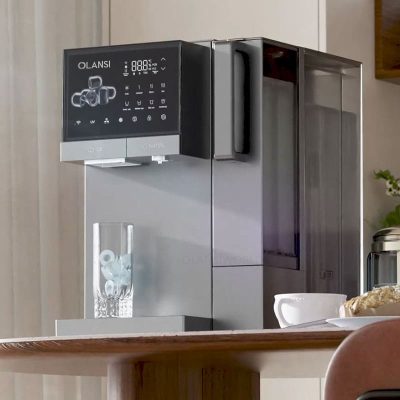
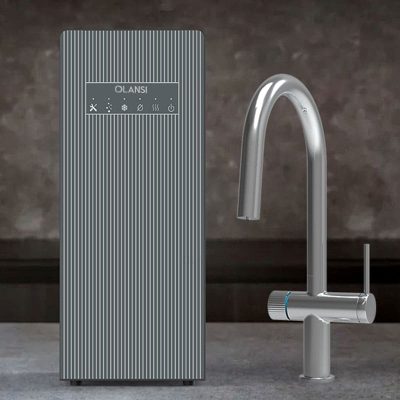
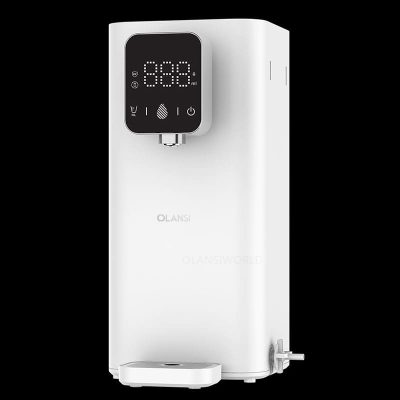
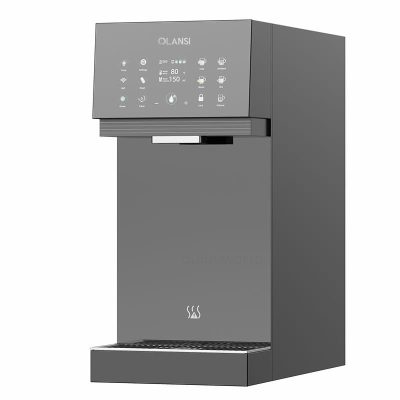
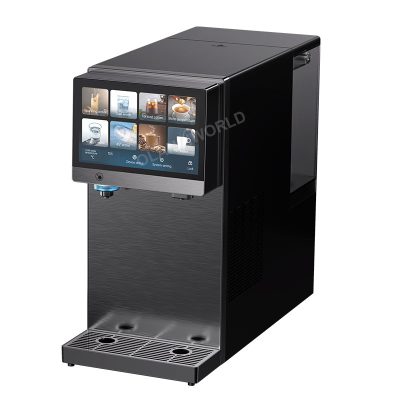
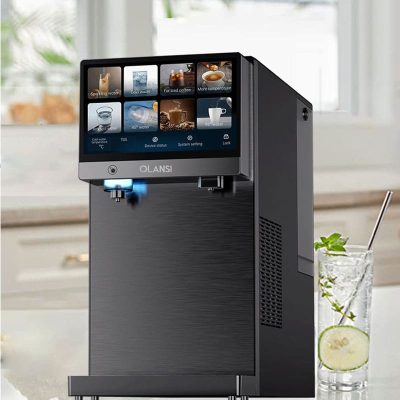
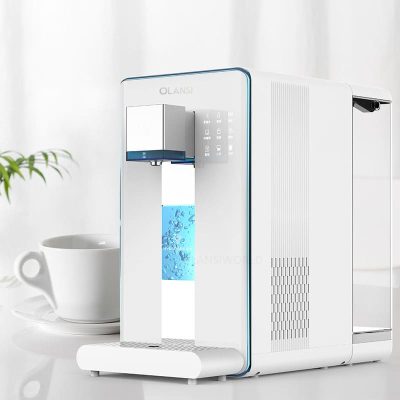
If you under-size, queues form and espresso workflow breaks. If you over-size, you waste capital and energy. The job is to match peak demand with heating capacity and recovery. That requires a simple usage model and a safety margin for rush periods.
Choose instant hot water dispensers by calculating peak cups per minute at required temperature, multiplying by cup volume, and mapping to heater power and flow. Offices often need 1.5–2.0 L/min continuous at 90–95°C; cafés and tea bars typically need 2.0–3.0 L/min. Add 20–30% headroom to avoid temperature sag at peak.
I always validate the math with live water tests at local mains temperature. In winter, incoming water may be 10°C, not 20°C, which increases power needs by 15–20%. A quick on-site test prevents seasonal performance surprises.
Boiling water is simple; delivering it safely, instantly, and efficiently is not. The wrong heating tech leads to scale, energy waste, and temperature drift. Buyers should compare tank, tankless, and hybrid architectures against their duty cycles and water hardness.
The best-performing instant hot water dispensers use tankless flash heaters or hybrid micro-tank systems. These minimize standby losses, improve temperature stability under load, and reduce scale hotspots. Look for 3-second instant heating, preheat learning, and anti-scale pathways with stainless-steel flow channels and smart descaling routines.
| Attribute | Tank (boiler) | Tankless (flash) | Hybrid (flash + small buffer) |
|---|---|---|---|
| Heat-up time | Minutes | Seconds | Seconds |
| Standby loss | High (20–60 W) | Very low | Low |
| Peak flow at 95°C | High short bursts | Power-limited | Best balance |
| Temperature stability | Good until tank depletes | Good with control | Excellent |
| Scale risk | Moderate to high | Lower (laminar flow) | Lower with mixing |
| Power draw | Lower average, high spikes when reheating | High instantaneous | Managed via buffer |
| Best for | Constant demand | Intermittent, energy-sensitive | Mixed demand patterns |
From our development experience, semiconductor PTC elements excel at precise low-to-mid power control, while compression heat-exchange and high-wattage flash heaters handle continuous high-flow. We pair fast heat with anti-scaling design so cafés keep flow rates without weekly tear-downs. As always, ask vendors to show stability plots: outlet temperature vs. time at rated flow. Graphs reveal real control quality.
Regulatory gaps can stall shipments or trigger recalls. The problem is that some sellers list marks without current test reports. You must verify documents tied to your SKU, not a similar model. Food-contact compliance and EMC are common pitfalls.
Verify electrical safety (CE/CB for EU, UL/ETL for North America), EMC/FCC, RoHS, and food-contact approvals (LFGB, FDA) for all wetted parts. For integrated filtration, check NSF/ANSI 42/53/58 claims and NSF/ANSI 372 for lead content. Ask for recent test reports from SGS/ITS or equivalent and match them to the exact bill of materials.
I validate certificates with the issuing lab portal and confirm the factory’s ISO 9001 and ISO 14001 certificates are current. In our Guangzhou facility, we maintain both systems and routinely audit against them. Even so, I always recommend buyers perform their own compliance review or hire a qualified compliance engineer for their target markets.
Choices abound, but not all suppliers can build high-duty, precise systems. The risk is choosing a trader or a factory without process control. Buyers should rate engineering depth, in-house capabilities, and test infrastructure, not just price.
Rank suppliers by engineering resources, automated production, in-house labs, certification history, and references. Seek OEM/ODM experience with instant hot water dispensers, flexible customizations, and verifiable capacity. Ask for pilot builds, PPAP-like documentation, and lifecycle test data. Favor partners who can iterate quickly and support after-sales parts.
Core capabilities:
● Industrial design, heating control, and water-path engineering
● In-house injection molding; metal fabrication; filter manufacturing if applicable
● Production scale and flexibility:
● Labs and QA:
● Certifications: Track record of CE/CB, UL/ETL; audits by SGS/ITS or similar
● Documentation: Control plans, PFMEA, traceability, test fixtures for 100% end-of-line checks
● References:Export regions and enterprise clients; verify with contactable references
Based on our business context, very few domestic manufacturers have mastered the latest instant-heating and integrated dispensing technologies; for years, top options came from Korea, Italy, and Germany. We built our program in response to overseas demand, improved the thermal and water-path design, and leveraged China’s supply chain to deliver higher quality at lower landed cost. In my last buyer visit, I walked through our Nansha automated lines and showed how machine vision checks heater assemblies in-line—small details that translate to consistent field performance.
B2B buyers need predictable quality. The mistake is relying on a golden sample without validating the process. Robust QC spans component validation, pilot runs, and 100% functional tests with traceability.
Institutional-grade QC for instant hot water dispensers includes component qualification, accelerated life tests, water hardness stress, and full functional end-of-line checks. Expect burn-in at operating temperature, electrical safety tests, and leak/pressure tests. The best factories maintain dedicated labs and follow ISO 9001 processes with documented control plans.
In our Nansha industry park, we operate dedicated evaluation labs, including aging rooms, reliability labs, salt-spray, and CADR and water-quality rooms, alongside automated assembly. We run air and water product lines with daily capacities into the thousands, but we still treat every new dispenser with a PVT gate. I encourage every buyer to request the factory’s control plan and sample EOL report before issuing a PO.
Sticker price hides the real cost. Standby losses, descaling labor, filter replacements, and downtime shape ROI. Energy prices and water hardness vary by region, which changes the model.
Total cost of ownership favors tankless or hybrid instant hot water dispensers due to low standby energy and stable output. Budget for filtration (3–12 months depending on hardness), periodic descaling, and spare parts. A typical office sees 15–30% lower energy use vs. tank boilers, with higher savings in intermittent-use sites.
In cafés, the ROI is often operational rather than purely energy: faster service, consistent tea extraction, and fewer bar workflow disruptions. Several partners tell me that shaving 15 seconds per cup during rush translates to one extra order every few minutes—small deltas that compound into revenue.
You want a supplier who can co-engineer, scale fast, and meet compliance. The risk with generalists is slow iteration and uneven quality. Our focus is health appliances, with vertical integration and automation that shorten time-to-market.
OLANSI develops and manufactures instant hot water dispensers and integrated drink systems with advanced flash heating, variable temperature control, and anti-scale design. We leverage China’s manufacturing advantages to deliver higher quality at lower cost. Our ISO 9001/14001 systems, in-house labs, and automation support consistent output and global certifications through SGS/ITS partners.
Anecdotally, I once hosted a European buyer who had struggled with temperature sag on a prior supplier’s unit. We ran a 10-minute 2 L/min test at 95°C on our pilot line. The outlet trace held within ±1.5°C. That one plot earned us a pilot order—and then a multi-market rollout after field trials.
Specify presets at 70°C (green teas), 80–85°C (oolong/white), 92–96°C (coffee), and 100°C (black/herbal). Require ±1–2°C stability at the outlet under real flow. Lockable presets help baristas and office users avoid scalding and protect taste consistency.
Not always. Tankless cuts standby energy and scales less, but requires higher instantaneous power. Hybrid designs pair flash heaters with a small insulated buffer to smooth peaks. Choose based on your power availability, peak flow needs, and usage pattern.
Use anti-scale or softening cartridges sized to local hardness, and design for easy descale. Specify smooth stainless channels, removable filters, and firmware-driven maintenance alerts. In water ≥200 ppm hardness, plan filter changes every 3–6 months or consider upstream softening.
It depends on destination. Commonly: CE/CB for EU, UL/ETL and FCC for North America, RoHS for substance compliance, and LFGB/FDA for food-contact materials. If integrated filtration claims are made, verify NSF/ANSI 42/53/58 and NSF/ANSI 372 for lead content. Always confirm with a compliance professional.
Ask for: BoM-linked CE/CB or UL/ETL reports, EMC/FCC test reports, RoHS/REACH data, LFGB/FDA certificates for wetted parts, ISO 9001/14001 certificates, control plans, EOL test procedures, reliability test summaries, and a pilot run report. Verify documents via issuing labs.
Choosing the best instant hot water dispensers comes down to measured performance, verified safety, and dependable manufacturing. Size for your real peak, prefer tankless or hybrid flash heating, and validate certifications and QC. If you need an OEM/ODM partner who can co-engineer, certify, and scale, contact me at OLANSI. I will help you build the right system—on time and on budget.
Certifications
OLANSI Repsects Quality Standards


Something isn’t Clear?
Feel free to contact me, and I will be more than happy to answer all of your questions.

Enter you email below, so we can send you this valuable report.